New Braunfels eye care
Diabetic eye disease in New Braunfels, TX
Diabetes can damage the small blood vessels of the retina. Yearly dilated exams catch changes early, when treatment works best.
What is diabetic eye disease?
Diabetic retinopathy happens when high blood sugar weakens the tiny blood vessels in the retina. They can leak fluid and blood, or abnormal new vessels can grow. When fluid collects in the macula, the center of the retina, it is called diabetic macular edema.
Diabetes also raises the risk of cataracts and glaucoma, so people with diabetes benefit from regular exams with an eye surgeon who treats all three. South Texas has high rates of diabetes, which makes screening especially important here.
Sudden vision loss, a sudden shower of floaters, or a curtain over your vision needs a same-day exam.
Diabetic eye disease care in New Braunfels
Patients come to our New Braunfels office at 457 Landa St, Suite F for diabetic eye disease care from Gruene, Canyon Lake, Garden Ridge, Bulverde, Spring Branch, Schertz and across New Braunfels. Dr. Kavanagh has cared for New Braunfels patients since 2001: 25 years of excellent eye care. New Braunfels patients have surgery a short drive away, at GRMC Outpatient in Seguin or at one of three San Antonio surgery centers.
Symptoms
- Often none in the early stages
- Blurry or fluctuating vision
- Spots, dark strings or floaters
- Dark or empty areas in your vision
- Trouble with colors
Risk factors
- Type 1 or type 2 diabetes, especially for many years
- High blood sugar or A1C
- High blood pressure and cholesterol
- Pregnancy in women with diabetes
How we evaluate it
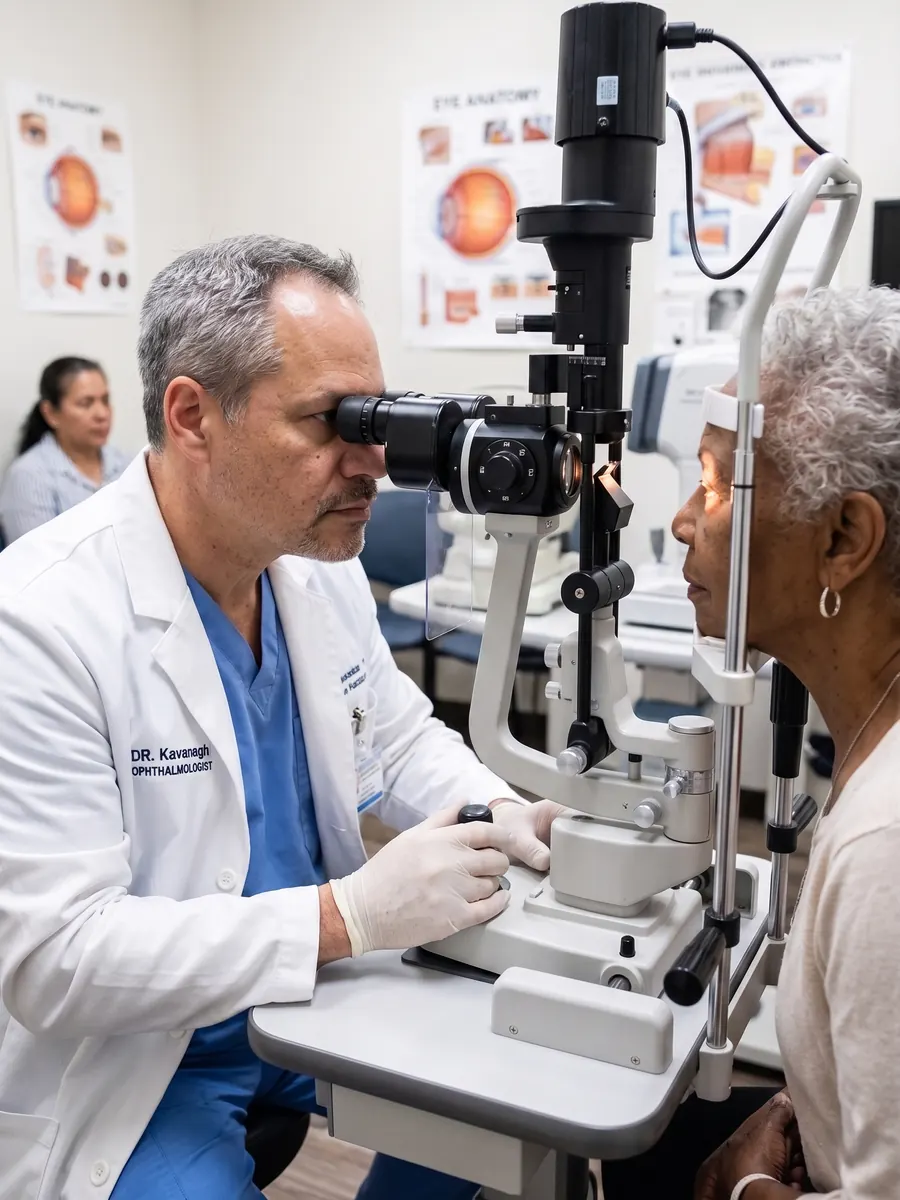
A dilated retinal exam, retinal photography and OCT scanning (a detailed cross-section of the retina) show leaking vessels and swelling, often before you notice any change.
Treatment options
Dr. Kavanagh and our team see patients for diabetic eye disease at our New Braunfels office and across South Texas. Every plan is tailored to your eyes after an exam.
For educational purposes. This page explains common conditions and treatments to help you prepare for your visit. Your exam determines the right plan for your eyes.

 NormalDiabetic retinopathy
How it can look
Diabetic eye disease, seen through the patient's eyes
Drag the slider to compare normal vision with a simulation of diabetic retinopathy. Everyone's experience is different, and early stages may cause no visible change at all.
Questions
Common questions
How often should I have an eye exam with diabetes?
At least once a year, or more often if changes are found. Pregnancy calls for closer monitoring.
Can diabetic retinopathy be reversed?
Early damage can stabilize and swelling can improve with treatment. Catching it early is the best protection.
Related conditions